

Understanding WPA3: The Latest Evolution in WiFi Security Protocols
In this article, we’ll delve into the latest evolution of Wi-Fi security protocols – WPA3. As technology advances, so do cyber threats, making it crucial to stay informed about the most secure methods for protecting your wireless networks.
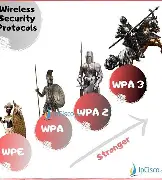
From WEP to WPA3: An Overview
- WEP (Wired Equivalent Privacy): Developed in the 90s, WEP aimed to prevent hackers from intercepting wireless data. However, its encryption keys were easily crackable, making it obsolete.
- WPA (Wi-Fi Protected Access): Released as an interim standard in 2003, WPA improved upon WEP’s flaws and enabled fast, easy adoption while a more permanent solution was developed. But even WPA has its vulnerabilities.
- WPA2: Introduced in 2004, WPA2 uses stronger encryption algorithms (AES) and authentication mechanisms (CCMP). While it significantly improved wireless security, a major flaw known as the KRACK vulnerability was discovered.
Enter WPA3: The Next Generation of Wi-Fi Security
Recognizing the need for even stronger encryption and better protection against cyber threats, WPA3 was developed. It builds upon the foundation laid by its predecessors while addressing their shortcomings.
Enhanced Encryption
WPA3 utilizes the strongest encryption algorithm currently available, 192-bit or 256-bit SAE (Simultaneous Authentication of Equals) with robust key derivation.

Improved Passphrase Protection
WPA3 introduces two new methods for passphrase protection: the OPS (Open Systems) and EAP (Extensible Authentication Protocol). These methods help protect against offline dictionary attacks.

Protection Against Rogue Access Points
WPA3 includes robust protection against rogue access points by incorporating the 1-second TKIP and CCMP handshake interval to prevent spoofing attacks.

Protection Against Brute Force Attacks
WPA3 implements a new mechanism that limits the number of authentication attempts, making brute force attacks ineffective.
Security for IoT Devices
WPA3 provides improved security for IoT devices by incorporating the Dragonfly Attack Protection mechanism, which helps protect against attacks targeting weak or known vulnerabilities in these devices.
Secure Your Wi-Fi Network with WPA3
To ensure the best possible protection for your wireless network, it’s essential to upgrade to a WPA3-compatible router and devices. Stay ahead of cyber threats and enjoy peace of mind knowing that your Wi-Fi is secure.