WiFi Security: Understanding 802.1X EAP
In this tutorial, we will delve into the intricacies of 802.1X EAP (Extensible Authentication Protocol) – a crucial component in Wi-Fi security.
What is 802.1X?
802.1X is a port-based network access control standard, designed to provide dynamic control of user access to wired and wireless networks.
What is EAP?
EAP (Extensible Authentication Protocol) is a framework for carrying authentication methods between an authenticator and an authentication server.
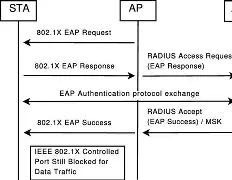
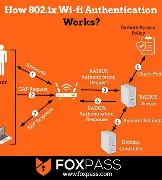
802.1X EAP Authentication Process
- Client requests access to the network (Association Request in Wi-Fi)
- Access Point (AP) challenges the client for authentication (Authenticator Challenge)
- Client sends its EAP identity and the EAP type being used
- AP sends an EAPOL Start message to the Authentication Server
- Authentication Server selects an appropriate EAP method for the client
- EAP messages are exchanged between the client and authentication server
- If successful, the AP grants network access (Authenticator-Accept)

EAP Types
Several EAP types exist, including EAP-TLS, PEAP (EAP-MSCHAPv2), and TLS (EAP-TTLS). Each has its own strengths and weaknesses.
Security Considerations
Ensure that your authentication server is properly configured and secured. Regularly update the EAP type used to stay secure against emerging threats.
Conclusion
Understanding 802.1X EAP is essential for securing Wi-Fi networks. By mastering this protocol, you can protect your network from unauthorized access and potential breaches.