
Wifi Security Types Explained

WiFi Security Types Explained
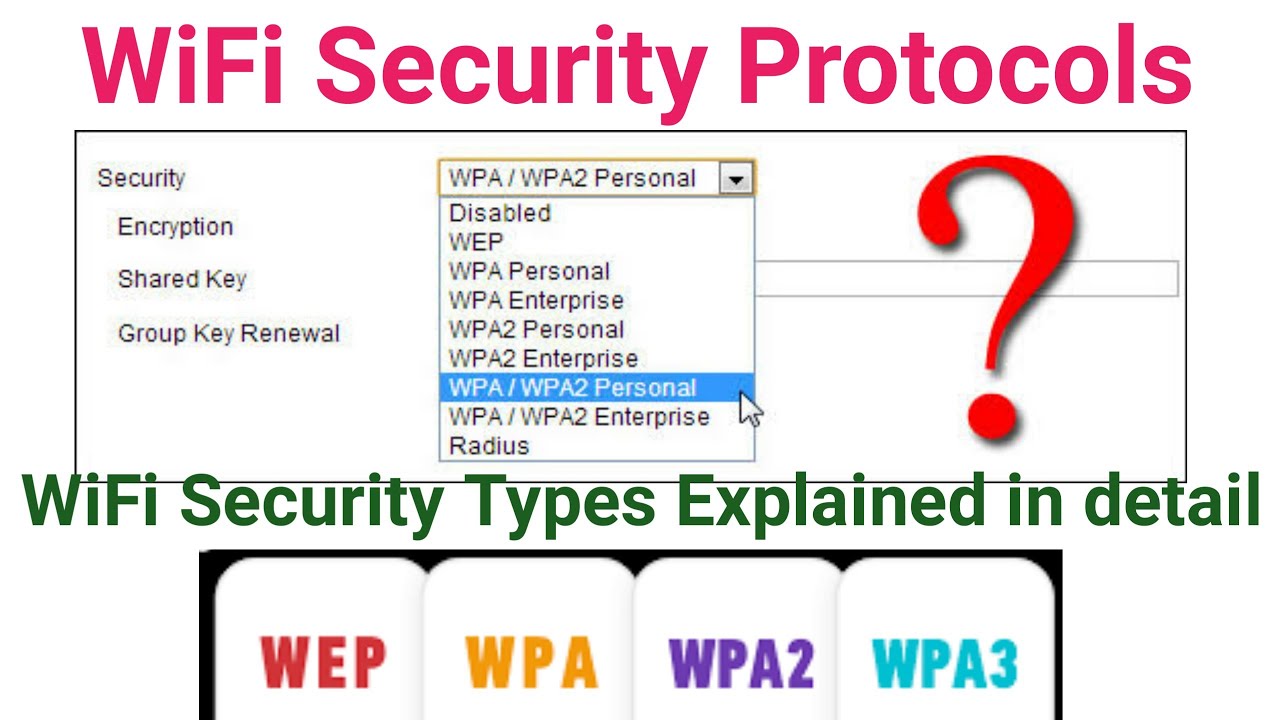
Wi-Fi security protocols are essential for safeguarding wireless networks from unauthorized access and potential cyber threats. As wireless technology has evolved, so too have the methods used to secure connections, leading to the development of various protocols such as WEP, WPA, WPA2, and WPA3.
WEP (Wired Equivalent Privacy)
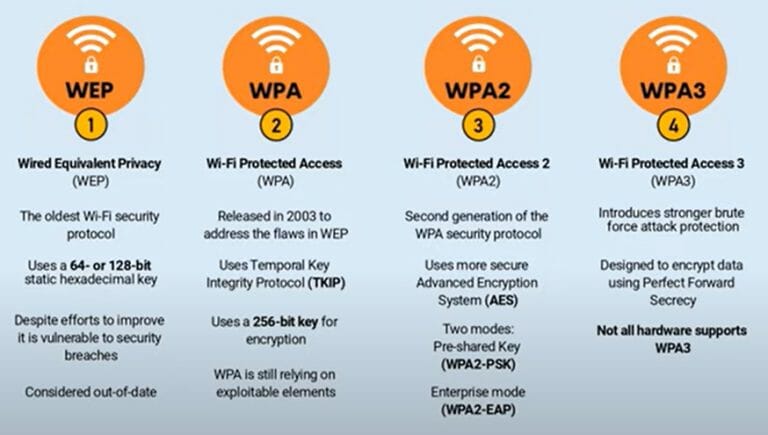
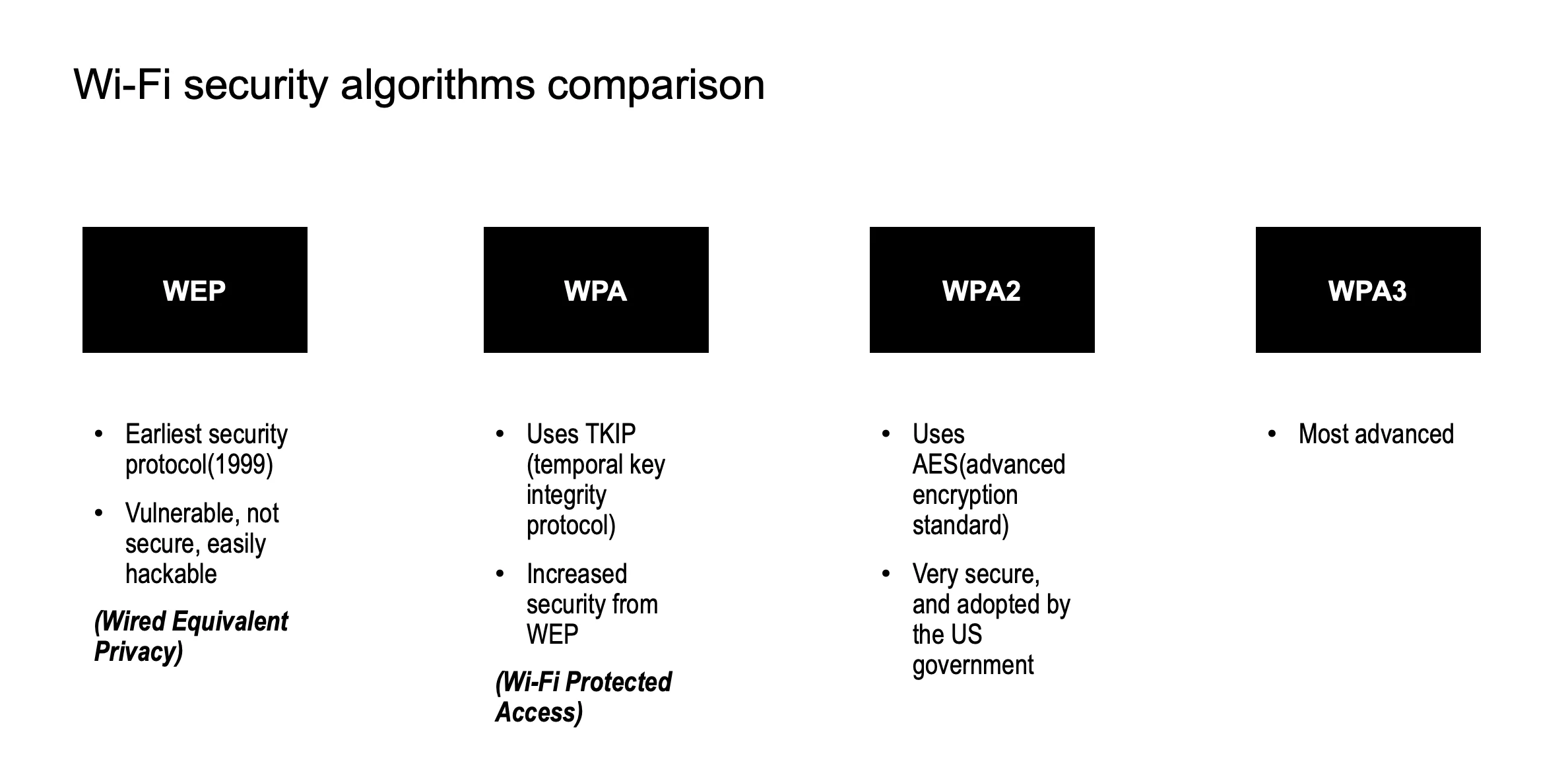
WEP was the first security protocol introduced in 1997, aiming to provide a basic level of protection comparable to wired networks. However, WEP’s vulnerabilities were soon exposed, with researchers demonstrating how easily it could be cracked, rendering it obsolete for modern security needs.
WPA (Wi-Fi Protected Access)
WPA was introduced in 2003 as a temporary fix to WEP’s shortcomings. It introduced stronger encryption methods, such as TKIP (Temporal Key Integrity Protocol), but still had vulnerabilities that could be exploited by attackers.
WPA2
WPA2, implemented in 2004, became the standard for Wi-Fi security, utilizing the more robust AES (Advanced Encryption Standard) encryption. This protocol is widely used today, offering a good balance of security and compatibility.
WPA3
WPA3, launched in 2018, is the latest and most secure Wi-Fi protocol. It introduces enhanced encryption, improved handshake processes, and better protection for open networks through Opportunistic Wireless Encryption (OWE).
Understanding the Need for Wi-Fi Security
In an increasingly connected world, protecting Wi-Fi from hackers is one of the most important tasks in cybersecurity. WPA3 offers several benefits, including password protection and safer connections.
Conclusion
Understanding the differences between Wi-Fi security protocols helps users and administrators make informed decisions about their wireless network security, ensuring data remains protected against evolving cyber threats.