
Wifi Security Modes Explained

WiFi Security Modes Explained
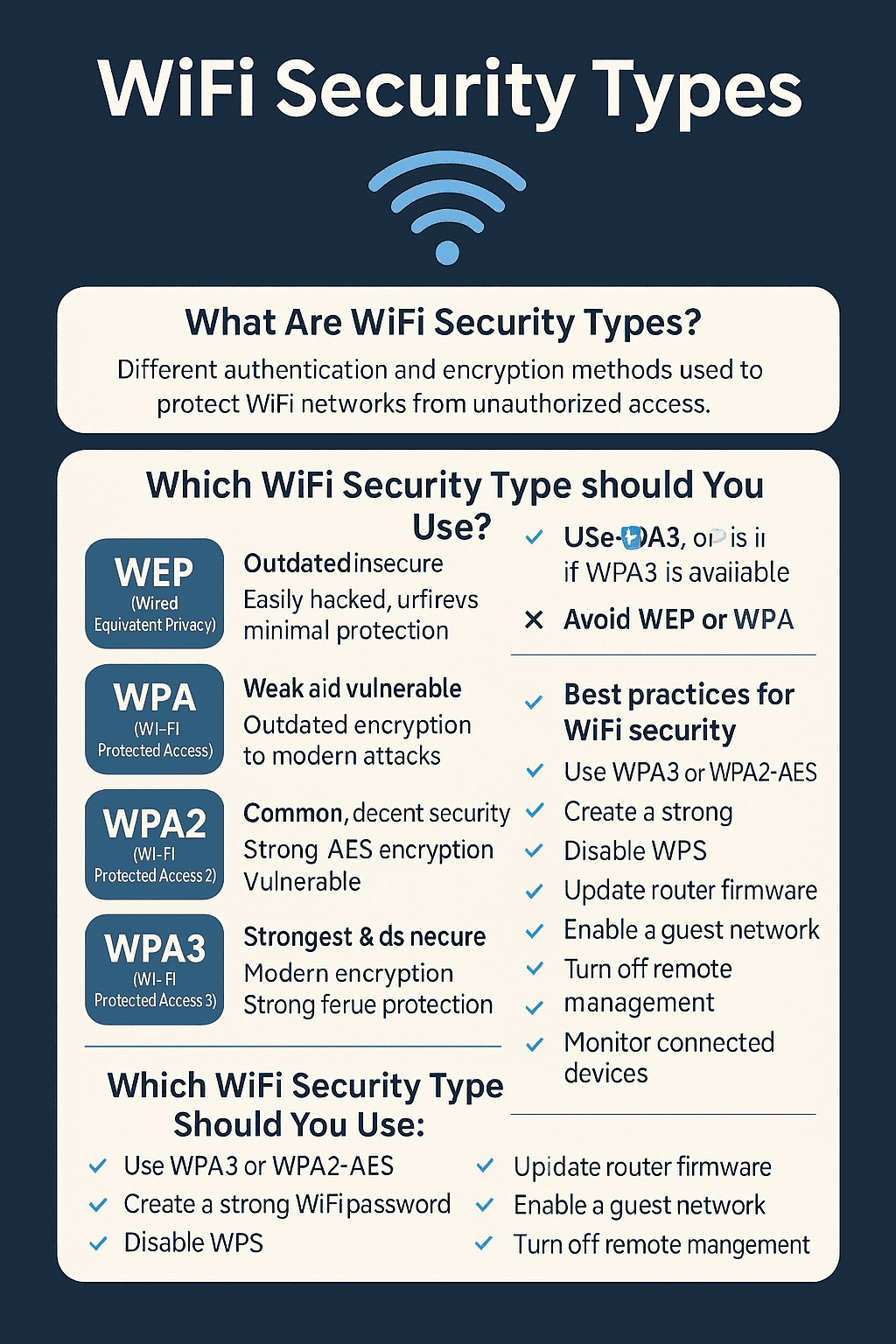
Wireless security is a critical aspect of protecting wireless networks and services from unwanted attacks. In this article, we will explore the different WiFi security modes, including WEP, WPA, WPA2, and WPA3, and explain their differences.
WEP (Wired Equivalent Privacy)
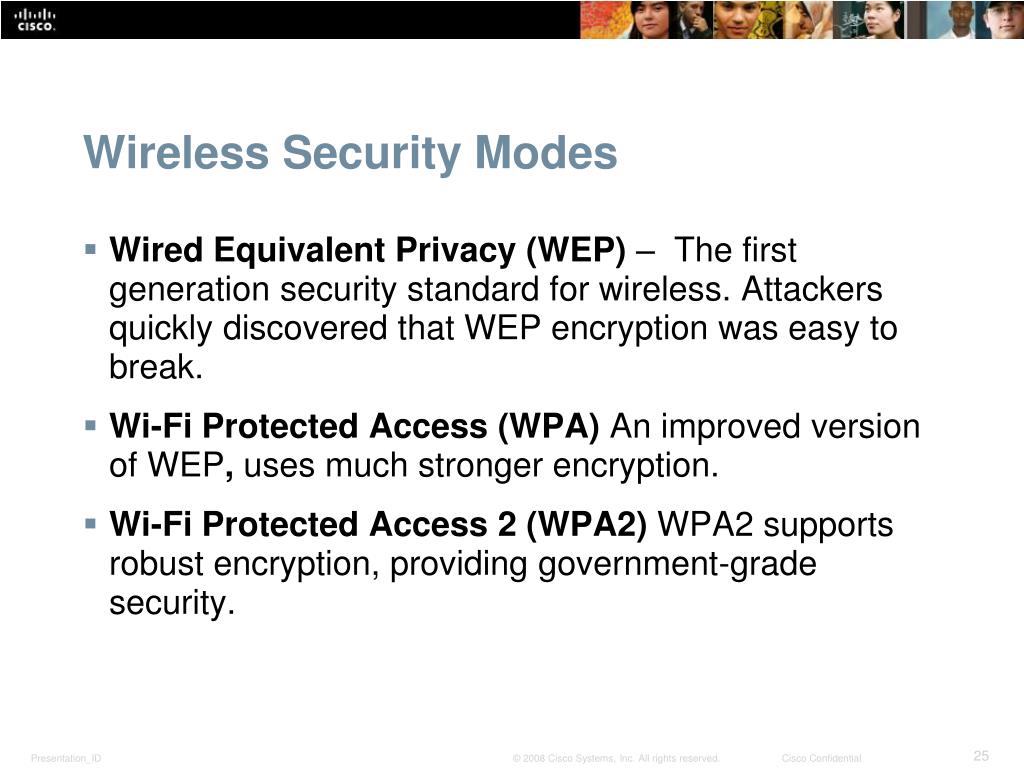
WEP is an outdated security protocol that was introduced in 1997. It uses a static key to encrypt data transmitted between the wireless client and the access point. However, WEP has several weaknesses, including a short key length and a lack of authentication mechanism.
WPA (WiFi Protected Access)
WPA was introduced in 2003 as an improvement over WEP. It uses a dynamic key exchange and TKIP (Temporal Key Integrity Protocol) to encrypt data. However, WPA still has some weaknesses, including a vulnerability to dictionary attacks.
WPA2 (WiFi Protected Access 2)
WPA2 was introduced in 2004 and is still widely used today. It uses AES (Advanced Encryption Standard) to encrypt data and CCMP (Counter Mode with Cipher Block Chaining Message Authentication Code Protocol) for authentication. However, WPA2 has some weaknesses, including a vulnerability to KRACK attacks.
WPA3 (WiFi Protected Access 3)
WPA3 is the latest security protocol, introduced in 2018. It uses a new key exchange protocol called Simultaneous Authentication of Equals (SAE) and provides better protection against dictionary attacks and KRACK attacks.
Comparison of WiFi Security Modes
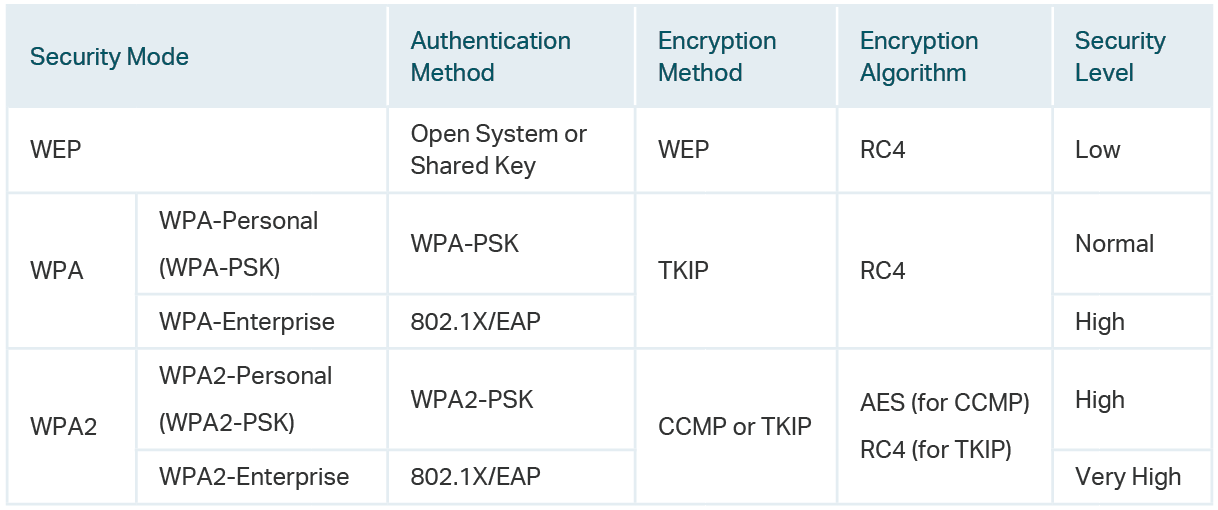
The following table summarizes the main differences between WEP, WPA, WPA2, and WPA3:
| Security Mode | Encryption Method | Authentication Mechanism | Vulnerabilities |
|---|---|---|---|
| WEP | Static key | None | Weak key length, lack of authentication mechanism |
| WPA | TKIP | Dynamic key exchange | Vulnerability to dictionary attacks |
| WPA2 | AES | CCMP | Vulnerability to KRACK attacks |
| WPA3 | Sae | Simultaneous Authentication of Equals | Better protection against dictionary attacks and KRACK attacks |
Conclusion
In conclusion, WiFi security is a critical aspect of protecting wireless networks and services from unwanted attacks. WPA3 is the latest security protocol that provides better protection against dictionary attacks and KRACK attacks. It is recommended to use WPA3 whenever possible.